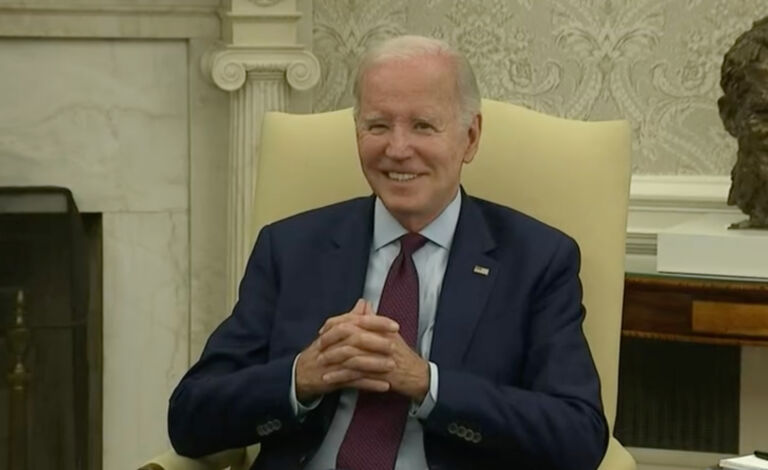
Editors at National Review Online call on President Biden to end the strike shutting down East Coast and Gulf Coast ports.
The International Longshoremen’s Association (ILA) demanded a 77 percent wage increase over six years and a complete ban on automation at ports on the East and Gulf Coasts in its negotiations for a new labor contract. As a ludicrous opening bid to be bargained down to something more reasonable, perhaps that demand was justified. But the ILA turned down more than one generous offer before shutting down ports from Maine to Texas in a strike it has been bragging about doing for over a year. It’s time for President Biden to use the powers he has under the Taft-Hartley Act to end the strike.
In general, we oppose government intervention in economic affairs, and we would prefer to see employers and employees come to terms without federal involvement. But labor-relations law as currently constituted under the Wagner Act creates monopolistic unions that exercise outsized power with the backing of the federal government. That’s why, after Republicans won control of Congress for the first time in 14 years in the 1946 midterms following a post-war strike wave, they passed the Taft-Hartley Act with broad popular support and over President Truman’s veto to limit the damage those monopolies can do.
The Taft-Hartley Act is already working, even though Biden has so far refused to use its strike-ending provision for economically harmful strikes. In many other countries, a dockworkers’ strike could spiral out of control by spurring solidarity strikes across the economy. The Teamsters, freight-rail union SMART-TD, West Coast dockworkers’ union ILWU, the Association of Flight Attendants, and the United Auto Workers have all pledged their solidarity with the ILA, but Taft-Hartley prohibits them from actually going on strike by limiting legal strikes to disputes between employers and employees.