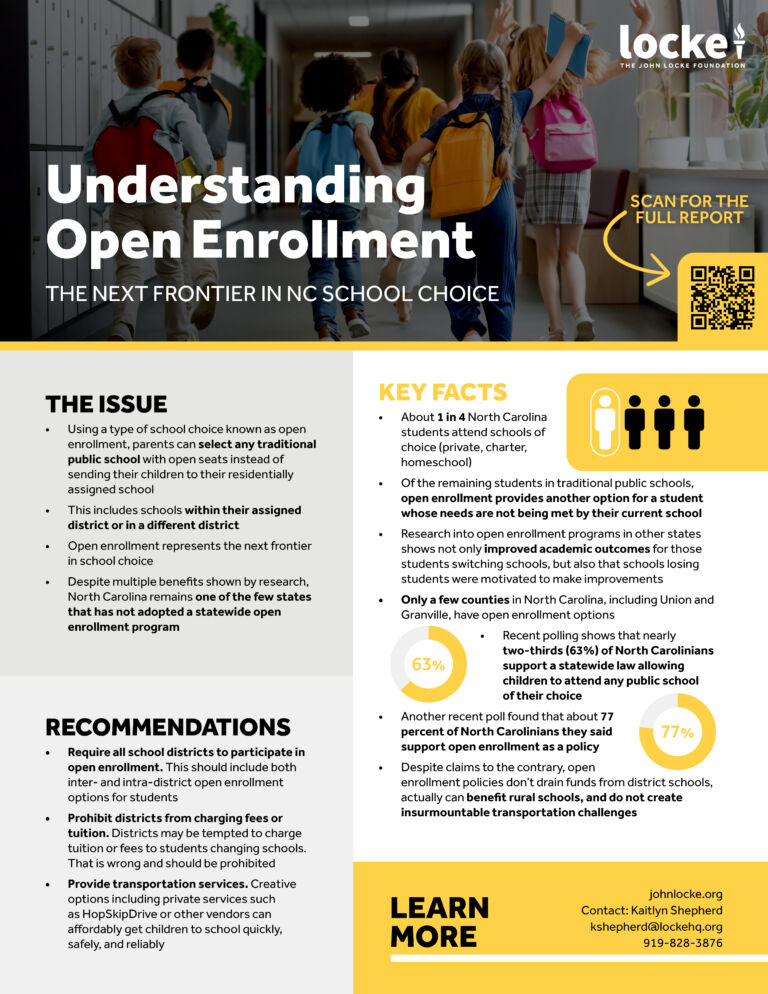
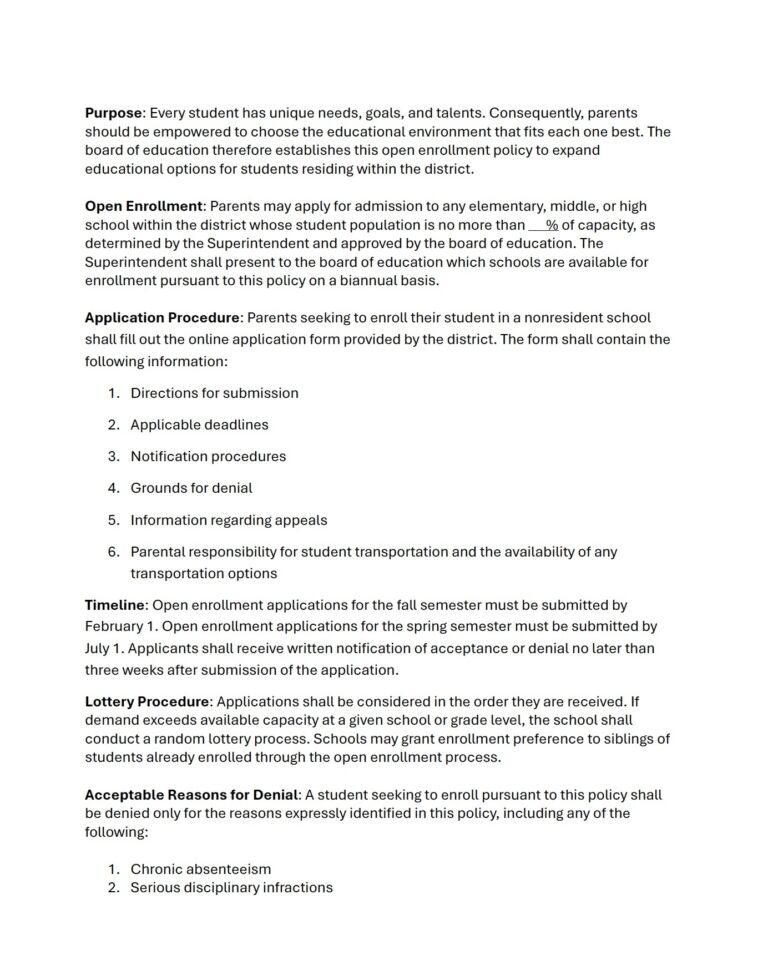
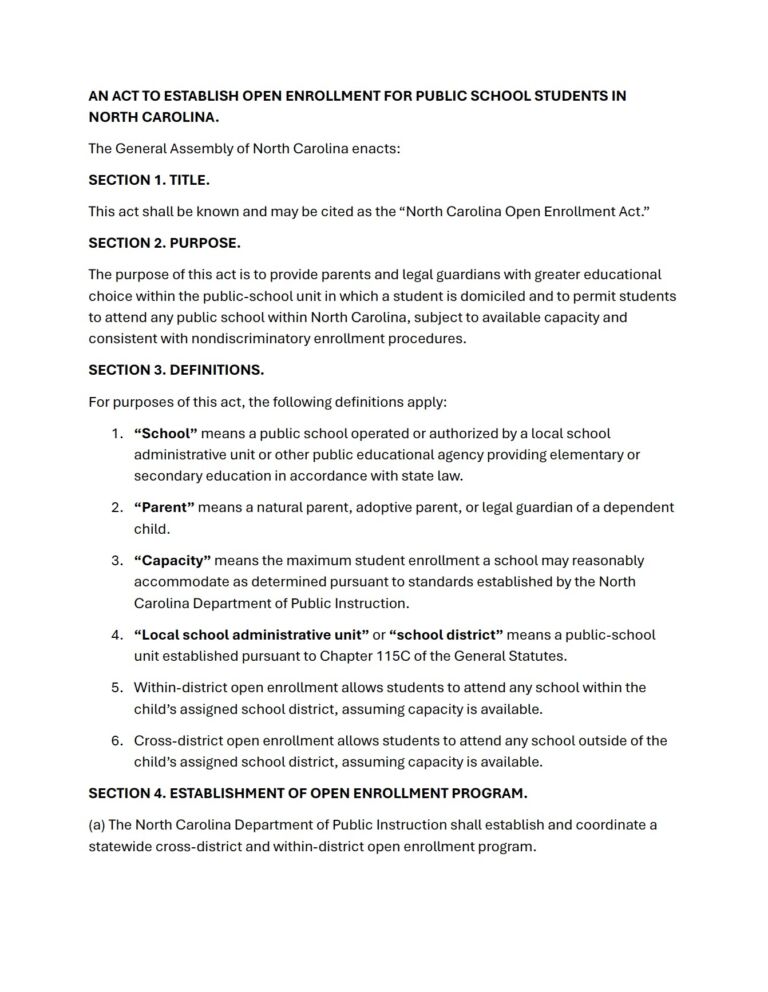
Using a type of school choice known as open enrollment, parents can select any traditional public school with open seats instead of sending their children to their residentially assigned school. Depending on the policy, parents can select a new school within their child’s home district (within-district open enrollment) or a school in a different district (cross-district open enrollment).
Research has pointed out the many benefits that open enrollment has not only for students but also for institutions. It can increase access to highly rated schools or districts, improve academic outcomes such as test scores and graduation rates, foster district improvement, and even help encourage more students to attend rural districts.
Despite these benefits, North Carolina remains one of the few states that has not adopted a statewide open enrollment program, whether that be cross-district, within-district, or both. Fortunately, several states can serve as models to help North Carolina implement open enrollment successfully. Oklahoma, for example, stands out for its strong cross-district and within-district policies that maximize opportunities for all students throughout the state. Wisconsin is also worth noting because of its exceptional data transparency measures, portable funding mechanisms, and unique approach to providing transportation for open-enrolled students.
Most school districts in North Carolina allow student transfers on a case-by-case basis, but these transfer policies typically fall short of true open enrollment because they give too much discretion to superintendents to refuse transfers and require families to provide sufficiently compelling evidence of hardship in order to switch schools.
Nevertheless, there are some school districts in North Carolina that have adopted relatively strong within-district open enrollment policies that let students choose among schools within their respective districts. Union County Public Schools and Granville County Public Schools are two such districts.
Recent poll results find that support for open enrollment is strong and spans economic, political, racial, and geographical divides. Meanwhile, the growth of open enrollment programs has taught us much about the components of successful implementation. Requiring districts to participate in open enrollment, prohibiting tuition and fees, using flexible funding mechanisms, and committing to transparency and accountability can do much to ensure that all families have access to open enrollment programs that are efficient and well managed.
Numerous myths challenge the public’s perception of open enrollment. A closer analysis, however, refutes allegations that open enrollment drains money from the public schools, presents insurmountable transportation challenges for families and districts, hurts small and rural districts, or contributes either to segregation or a loss of community identity.
This guidebook will cover what open enrollment is and how it works, case studies from states that have successfully implemented open enrollment, and examples of North Carolina school districts that already use open enrollment within their districts. It will also present polling data showing what parents and members of the public think about open enrollment, debunk common myths about open enrollment, and provide implementation guidance and best practices.