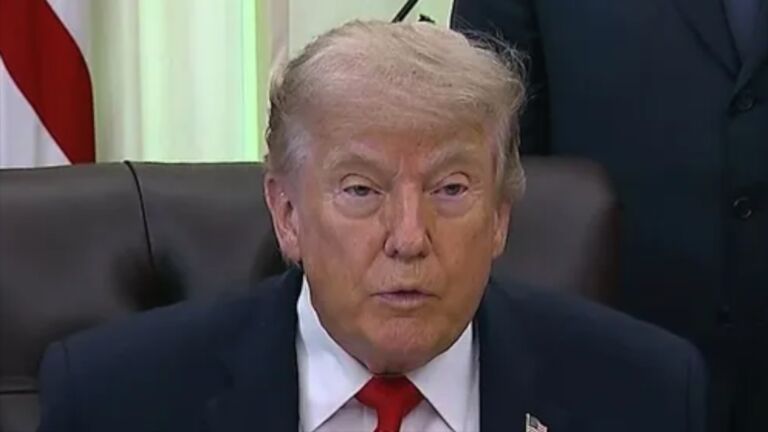
Michael Strain of the American Enterprise Institute explains his concerns about a recent Trump administration action.
During the 2008 financial crisis, the US government spent and risked taxpayer dollars to stop financial institutions and carmakers from going out of business. Those policies were enacted during a crisis and were designed to be temporary. President Donald Trump’s deal to have the government take a 10 per cent stake in Intel is not temporary.
Are we in a crisis? Many economists, including me, would say no. But politicians in both parties have claimed the opposite, arguing that the US is too reliant on semiconductors made in Taiwan and exposed to Chinese security threats. Manufacturing leading-edge chips, they argue, should take place in the US.
Trump’s recent deal with chipmakers Nvidia and AMD, however, suggests security concerns are being used by the president as a fig leaf for rank corporate shakedowns. In that deal, Trump agreed to allow Nvidia and AMD to sell H20 and MI308 AI chips to China in exchange for the Treasury receiving 15 per cent of the revenue. Security is clearly not the president’s motivating concern.
Troublingly, the government might have its eye on equity stakes beyond Intel. Commerce secretary Howard Lutnick is reportedly exploring government stakes in other semiconductor manufacturers that received Biden-era Chips Act subsidies, such as TSMC and Samsung.
This all strikes me as not so much a strategic embrace of state capitalism as an opportunistic attempt by Trump to “get the best deal” in one-off situations. The existing deals are worrying enough. But Trump’s actions also create a troubling precedent.
Expanded state involvement will create serious challenges for the companies on the receiving end of it. Diverting time and energy from competing in the market to pleasing the president might work in the short term, as Intel’s increasing share price has indicated. But the need for political support could make it harder for the chipmaker to enact needed changes to stay competitive, including politically unpopular moves like closing plants and laying off workers.