







John Locke Foundation
Sign Up For Your Key Account JLF Western North Carolina

Issue Guide

City and County Issue Guide


TAX INCREASES ON THE BALLOTS
As another spate of counties asks voters to agree to raising taxes, JLF asks if the counties really need new revenues

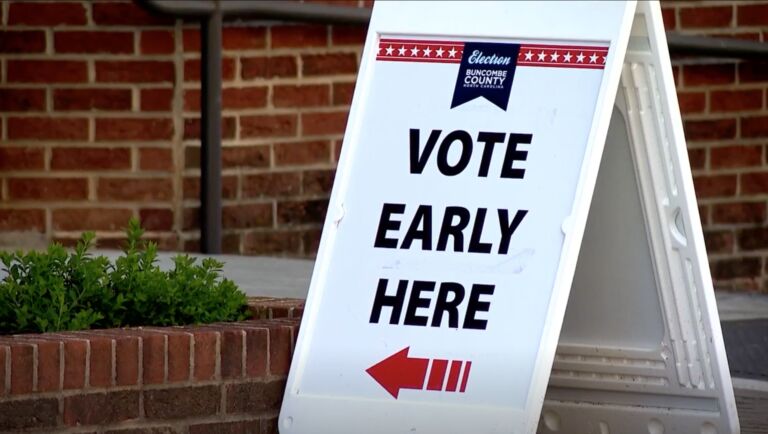
On May 6, 2008, 24 counties will have put tax increases on the ballots. Last year the N.C. General Assembly relieved all counties of paying the portion of Medicaid expenses that had been forced on them, in exchange for the half-cent sales tax that the counties levied to help pay those expenses, and gave counties the option to seek voter approval of either increasing in the sales tax by one-quarter cent or tripling the land-transfer tax rate from 0.2 to 0.6 percent. Counties could opt not to seek tax increases at all, of course. So far voters in counties across the state have faced 33 total tax-increase proposals and voted down 27. The John Locke Foundation, North Carolina's leading think tank, has looked at the financial situations of the following counties seeking tax increases: Ashe, Duplin, Gaston, Greene, Guilford, Haywood, Hertford, Lee, Lincoln, Nash, Onslow, Randolph, Rockingham, Stanly, Tyrrell, Wayne, Wilkes, and Wilson.

The current discussion of a possible summer holiday on federal gasoline taxes is one that is has become extremely muddled.The reason is that advocates and opponents of a holiday tax break are each arguing their case from a different perspective.

The range of arguments over a federal gasoline tax holiday is broad: costs vs. benefits, long run vs. short run, overall macroeconomic growth vs. family welfare. The result is a confusing jumble of analysis and policy prescrptions, with nary a market option among the suggestions.


Learn More »


Does Guilford need a sales tax increase?

The Guilford County commissioners are asking voters to approve a sales-tax increase on May 6. This report identifies nearly $83.4 million in revenue and savings the county could use to meet its needs — over five times the amount that the proposed tax increase would produce.

Learn More »

Counties seek voter approval to raise taxes

On Nov. 6, 2007, several N.C. counties sought voter approval to raise county taxes, including: Brunswick, Catawba, Chatham, Columbus, Cumberland, Davie, Gates, Graham, Greene, Harnett, Henderson, Hertford, Hoke, Johnston, Lenoir, Macon, Martin, Moore, Pender, Pitt, Polk, Robeson, Rutherford, Sampson, Surry, Swain, Union, and Washington. How did they fare?

Learn More »

N.C. local government costs continue to grow

RALEIGH – The average resident of the median North Carolina county paid $1,236 to fund city and county government in the 2006 budget year. That number jumped 4.2 percent from the previous year, according to a new report from the Center for Local Innovation.

Learn More »


More News More News More News

Turn to the free market

Job Training That Works

Despite research consistently finding that government-provided job training and placement programs are wasteful, inefficient, and sometimes even counterproductive, while private programs yield strong, positive results, about half a billion dollars a year in federal, state, and local money is spent on public programs in North Carolina.

---

Free-market principles can boost redevelopment

RALEIGH – A West Coast success story can guide N.C. cities and towns looking to spur redevelopment. A new John Locke Foundation Spotlight report shows how Anaheim, Calif., boosted its fortunes without using economic incentives or abusing eminent domain powers.

Turn from climate fearmongering

Global warming proposals would gut N.C. economy

RALEIGH – North Carolina would lose more than 33,000 jobs and face a $4.5 billion hit to its Gross State Product by 2011, if lawmakers adopt just a fraction of the policies under consideration now to address climate change. A Boston-based economist who has analyzed the policy proposals will deliver that message Tuesday to a legislative study group.

---

Serious problems ‘plague’ N.C. climate change report

RALEIGH – An outside consultant’s report on proposed global warming policies is plagued by problems that render it “useless” to North Carolina policy makers. That’s the assessment of a new peer review (pdf version) from a Boston-based economic research group.


What's New

Voters overwhelmingly reject local tax hikes

Click here to view and here to listen to John Hood discussing Tuesday’s local tax votes.

Learn More »

---

A Wind Power Primer
Emission reduction negligible for land-intensive, unreliable, noisy, ugly bird-killing turbines

Key facts:

  • Wind power is generated through large groups of massive industrial wind turbines, sometimes as tall as 50-story skyscrapers.
  • Learn More »

    ---

    The Economics of Climate Change Legislation in North Carolina

    The Beacon Hill Institute at Suffolk University in Boston, Mass., reviews policies under consideration in North Carolina to cut carbon dioxide (CO2) emissions. Supporters contend those policies would help North Carolina respond to climate change. Supporters also contend the policies would produce positive economic benefits.

    Learn More »

 
Calendar
 

Monday, May 12, 2008 at 12:00 Noon »
A meeting of the Shaftesbury Society with our special guest Sam A. Hieb
The John Locke Foundation, 200 W Morgan St., Raleigh, NC
Piedmont Triad’s New (Government-based) Economy

---

Thursday, May 22, 2008 at 12:00 noon »
Headliner Luncheon in Raleigh, NC with our special guest Fred Barnes
Holiday Inn Brownstone Hotel, 1707 Hillsborough St., Raleigh, NC
The 2008 Election: A Washington Perspective

---


© 2008 John Locke Foundation | 200 West Morgan St., Raleigh, NC 27601, Voice: (919) 828-3876 | Privacy Policy | Terms of Use